
Close

Effective supply chain management is critical to fostering a resilient and sustainable supply chain. At FPT, we are committed to integrating environmental, social, and governance (ESG) considerations into our supplier management practices. We believe that responsible sourcing can help mitigate risks and adverse impacts, strengthen supply chain resilience, and create long-term benefits for stakeholders.
Over the years, FPT has implemented various measures to strengthen supplier management and promote a sustainable supply chain. In particular, the Company introduced the Supply Chain Management Procedure to identify supplier-related risks, and support suppliers for capacity buildings and their ESG initiatives. These efforts aim to mitigate potential social and environmental impacts associated with suppliers while enhancing the sustainability and resilience of the Company’s supply chain.
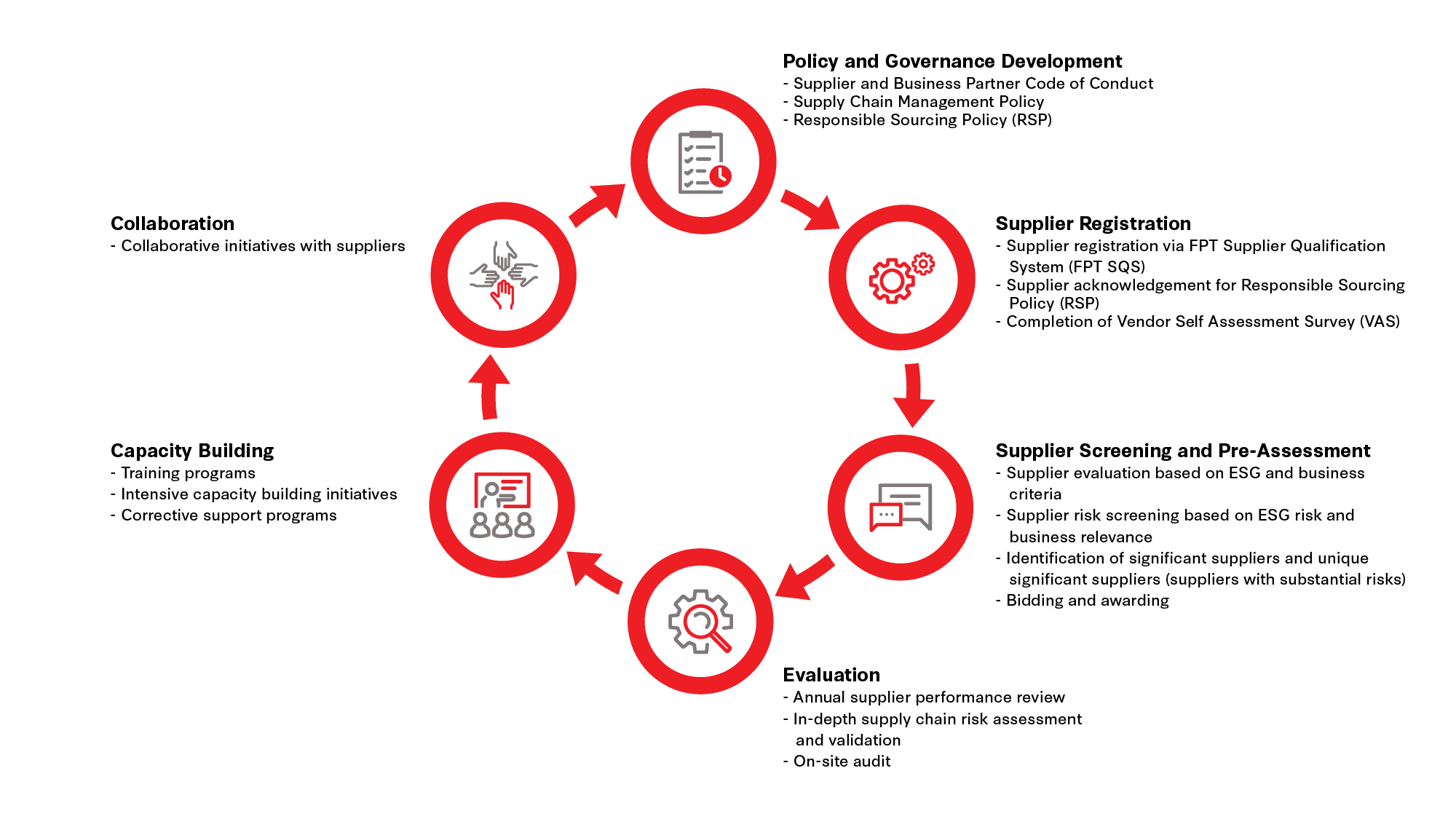
To ensure effective supply chain management and that its policies remain up to date and aligned with applicable regulations and stakeholders’ expectations, the Company revised the Supplier and Business Partner Code of Conduct, the Supply Chain Management Policy, and the Responsible Sourcing Policy, which were approved by the Executive Committee. These policies are available on the Company’s website and provide a framework for managing suppliers and their activities, while helping to mitigate potential social and environmental impacts associated with supplier operations.
The Company has implemented the FPT Supplier Qualification System (FPT SQS), which requires all existing and new suppliers to complete Supplier E-Registration, complete the Vendor Sustainability Assessment Survey (VAS), and read and acknowledge the RSP.
The VAS is a desk-based assessment, designed to assess suppliers on sustainability-related matters and evaluate their compliance with applicable legal requirements, sustainability principles, and the Company’s RSP, which covers environmental, social, and governance risks. The VAS covers a wide range of topics, including business operations, ethics, environmental management, health, safety and well-being in the workplace, human rights, labor management, supplier management, and performance monitoring and reporting. The information collected through the VAS is reviewed, verified and analyzed to assess suppliers’ ESG performance and determine their alignment with the topics outlined in the survey.
Evaluation for Bidding
The Company conducts supplier evaluations prior to contract award by assessing both business and ESG criteria. These include, but are not limited to, suppliers’ reliability and financial management capabilities, technical and technological innovation, management and consideration of the impacts on safety and environment, occupational health, and quality of work, suppliers’ risks regarding environment, social, and governance issues, and other relevant indicators, as appropriate.
Risk Screening
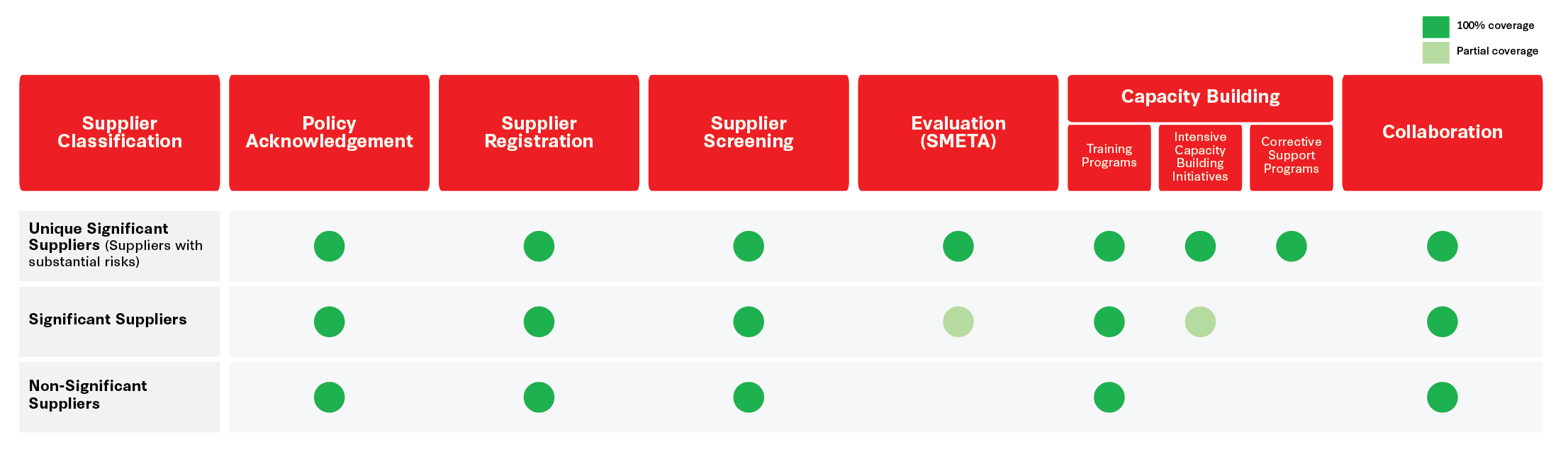
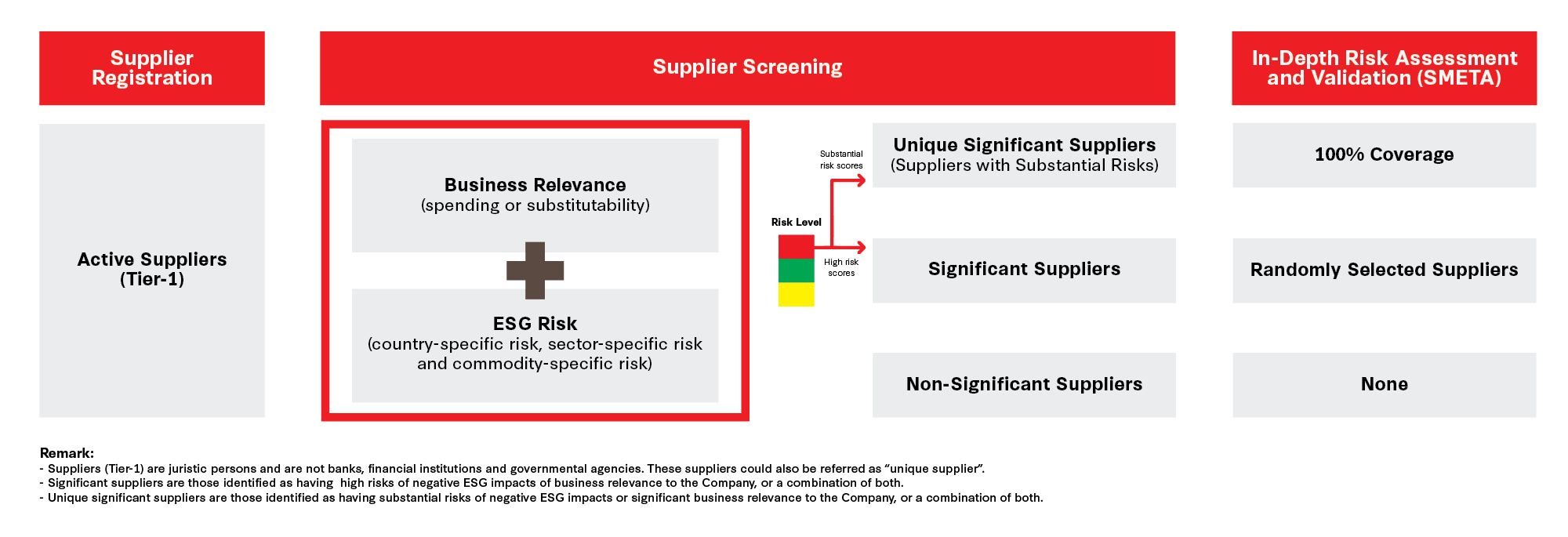
The Company screens suppliers through its supplier screening process to identify its non-significant suppliers, significant suppliers, or unique significant suppliers (suppliers with substantial risks). The screening process is based on desk-based research and evaluates suppliers against on two key criteria.
The Company has also identified key ESG risks across its supply chain. These risks are incorporated into the supplier screening process and serve as key factors in evaluating risk levels.
Environment | Social | Governance |
 |  |  |
|
|
|
Annual Supplier Performance Review
The Company requires the responsible departments or business units to conduct annual supplier performance reviews based on various criteria, including, but not limited to, quality, deliverables, timeliness, and other relevant indicators, as appropriate.
In-Depth Risk Assessment and Validation
The Company conducts in-depth supply chain risk assessment and validation for unique significant suppliers (suppliers with substantial risks). To validate and assess the identified risks, the Company applies the SMETA (Sedex Members Ethical Trade Audit), which evaluates suppliers across key areas, including labour standard, occupational health and safety, environmental management, and business ethics. The Company also conducts random in-depth risk assessment and validation for some significant suppliers.
On-site Audit
If the results of the in-depth risk assessment and validation using SMETA indicate that a unique significant supplier (suppliers with substantial risks) remains at a high-risk level, the Company will conduct an on-site audit of that supplier to further assess its ESG performance and management practices.
The Company conducts capacity-building sessions for all suppliers on an annual basis. These sessions may be delivered as training programs, intensive capacity building initiatives, or corrective support programs. Corrective support programs are provided specifically to unique significant suppliers (suppliers with substantial risks) and are designed to develop corrective action plans to mitigate ESG risks and prevent potential adverse impacts.
The capacity-building sessions cover a range of topics, including, but not limited to, the Company's policies and practices, sustainability issues, environmentally friendly materials, and green building standards. Through these initiatives, the Company seeks to enhance suppliers' ESG capabilities and operational practices, thereby reducing potential adverse environmental and social impacts across the supply chain. These efforts also contribute to creating long-term value for stakeholders and strengthening the sustainability of the Company’s supply chain.
 |  |  |
Training | Intensive Capacity | Corrective |
The Company believes that collaborations with stakeholders, particularly suppliers, are essential to advancing sustainability, promoting responsible sourcing practices, and creating positive long-term impacts for society and the environment. Accordingly, the Company prioritizes the implementation of collaborative programs with suppliers to support their sustainability journey and contribute to the achievement of the Sustainable Development Goals (SDGs). One notable example of this collaboration is the Company's partnership with suppliers to achieve the certification from the Thailand Greenhouse Gas Management Organization (TGO).
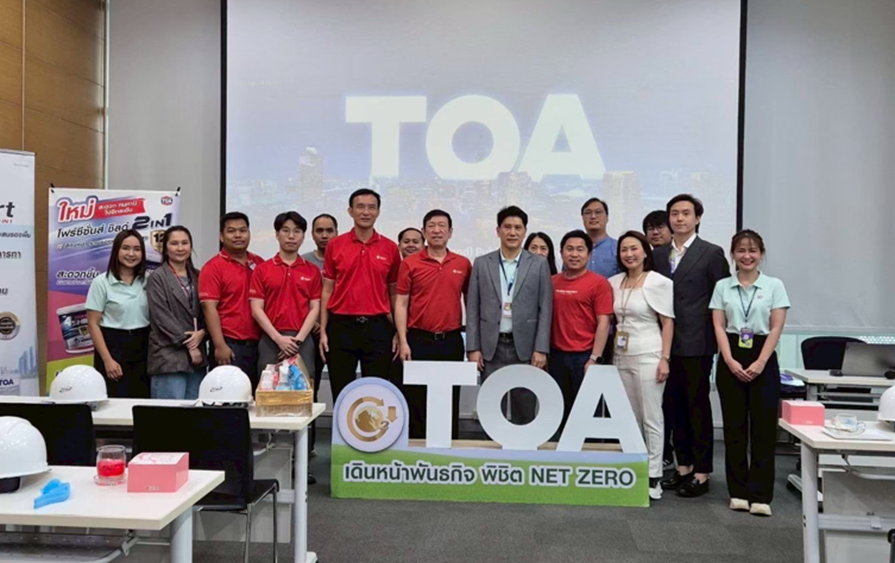
In addition, the Company collaborates with external organizations to strengthen suppliers' capabilities and enhance their knowledge across a range of sustainability-related topics, including greenhouse gas management and human rights.

The Company engages with suppliers across a range of sustainability-related topics through various engagement approaches. The current supplier engagement strategy is presented below.